Training & Curriculum SpecialistSocial & Emotional DevelopmentLesson 1ApplySocial–Emotional Framework
Extended Learning
WWW.VIRTUALLABSCHOOL.ORG
ACTIVITY ID: 26861
Name
Certifier
Date
Social and emotional learning (SEL) is a vital aspect of education and human development. It is the process through which individuals acquire and apply the knowledge, skills, and attitudes to develop healthy identities, manage emotions, achieve personal and collective goals, demonstrate empathy for others, build and maintain positive relationships, and make responsible and caring decisions. SEL helps create environments that promote excellence by fostering strong partnerships between care and education programs, families, and communities. It empowers individuals to contribute to safe and healthy communities.
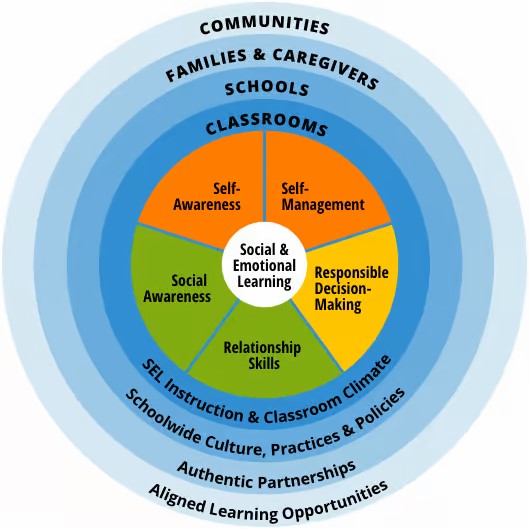
CASEL’s SEL Framework identifies five core competence areas: self-awareness, self-management, social awareness, relationship skills, and responsible decision-making. These competencies can be taught and applied at various developmental stages and across different settings, helping children and youth succeed academically, engage in school and civic life, improve their health and well-being, and pursue fulfilling careers.
Core Competence Areas
Self-Awareness: The ability to recognize and understand one’s emotions, thoughts, and values, and how they influence behavior. It includes recognizing strengths and areas for growth, experiencing self-efficacy, and developing a sense of purpose. It includes skills such as:
Identifying one’s emotions
Demonstrating honesty and integrity
Understanding one’s strengths and assets
Having a growth mindset
Developing interests and a sense of purpose
Self-Management: The ability to effectively manage emotions, thoughts, and behaviors to achieve personal goals. It includes stress management, self-discipline, motivation, and setting goals. It includes skills such as:
Managing one’s emotions
Exhibiting self-control
Using stress-management techniques
Using planning and organizational skills
Setting and achieving personal goals
Taking initiative
Social Awareness: The ability to understand the perspective of and empathize with others. It includes recognizing social norms, understanding different perspectives, and demonstrating compassion for others. It includes skills such as:
Perspective taking
Recognizing other’s strengths
Demonstrating compassion and empathy
Showing concern for other’s feelings
Understanding and expressing gratitude
Relationship Skills:The ability to establish and maintain healthy and supportive relationships with others. This includes the ability to communicate clearly, cooperate and collaborate with others, problem solve and negotiate conflicts constructively. It includes skills such as:
Effective communication
Developing positive relationships
Engaging in teamwork
Problem solving and conflict resolution
Resisting social pressures
Demonstrating leadership in groups
Seeking or offering support and help when needed
Standing up for others
Responsible Decision-Making: The ability to make constructive choices about personal and social interactions. This involves considering ethical standards, analyzing situations, and evaluating the consequences of actions for personal and collective well-being. It includes skills such as:
Demonstrating curiosity and open-mindedness
Identifying solutions to personal and social problems
Analyzing information to make informed decisions
Evaluating the consequences of one’s actions
Using critical thinking skills inside and outside of the educational setting
Reflecting on one’s role to promote personal, family, and community well-being
Key Settings for SEL Integration
Classrooms: Social and emotional skills are enhanced through various teaching methods, such as explicit instruction, cooperative learning, project-based learning, and integrating SEL into academic curricula. SEL instruction works best in environments where children and teachers build positive, caring relationships.
Schools or Care and Education Programs: SEL is integrated into the entire program experience, promoting a healthy climate where all children, youth and adults feel respected and supported. It’s important for programs to plan, implement, and evaluate SEL practices to ensure positive social, emotional, and academic outcomes.
Families and Caregivers: When programs and families collaborate and form authentic partnerships, they can strengthen children’s social and emotional development. Family involvement is crucial for reinforcing SEL efforts, and child and youth programs can engage families through communication, volunteer opportunities, and learning activities that extend into the home.
Communities: Community partners can provide safe, supportive environments where students practice and develop their social and emotional skills. Schools, child and youth programs, and community organizations should work together to align strategies and communication to support SEL efforts.
SEL creates the foundation for individuals and child and youth programs to address practices, improve learning environments, and nurture the talents and strengths of all individuals, helping them grow socially, emotionally, and academically. By fostering a positive, supportive climate, SEL encourages individuals to make responsible decisions and contribute to the well-being of their communities.
This activity has been adapted from The Collaborative for Academic, Social and Emotional Learning (CASEL) Social and Emotional Learning Framework.


 Training & Curriculum Specialist
Social & Emotional Development
Lesson 1
Apply
Social–Emotional Framework
Training & Curriculum Specialist
Social & Emotional Development
Lesson 1
Apply
Social–Emotional Framework
 Extended Learning